From Chris Hewett, Founder
My family and friends all joke that I like to start conversations with "What if..." followed by some outlandish thought or idea. For some reason my mind naturally wants to solve problems. It's a bit of a compulsion, honestly.
GROOVS started with "What if..."
"What if...playing a musical instrument was integrated with meditation practice?"
It was an idea sparked by the book, Effortless Mastery by Kenny Werner, an accomplished jazz pianist. One line stuck with me: "When you don't try as hard to be good, you play better." It was about how to get out of our own way. He even provided links to various traditional guided meditation practices designed to reduce this mental interference. As inspired as I was by the book, I wasn't doing the meditations.
What inspired me most was the story of his teacher, who for months instructed him to perfect a single note on the keyboard. Months! The goal was to play that one note effortlessly before moving on to the next. A bit extreme, I admit. But from my own experience playing music, I know that hitting the right, beautiful note at the right time can be incredibly rewarding. There's all kinds of music with minimal notes that sound amazing. That's when it hit me.
"What if I have a library of inspiring backing tracks in the style of Radiohead, Moby, Jungle, etc. where I mindfully repeat very simple melodies, harmonies, and rhythms using a piano or guitar?"
"What if...practicing music meditation every day not only trained my mind, but also helped me grow as a musician and performer?"
Long story, very short: after cycles of prototyping and iterating, I decided that the first version of my app shouldn't require an instrument, making the practice accessible to anyone who wants to perform better under pressure (e.g., athletes, creatives, executives). I figured, most humans love music, and they're probably tapping along as they listen anyway. So..."What if...we make tapping just a little more intentional?"
"What if...meditation (aka training the mind) could be as enjoyable as listening to your favorite music?"
That's where we are today.
P.S. And for you musicians out there, don't worry. We have plans for you too!
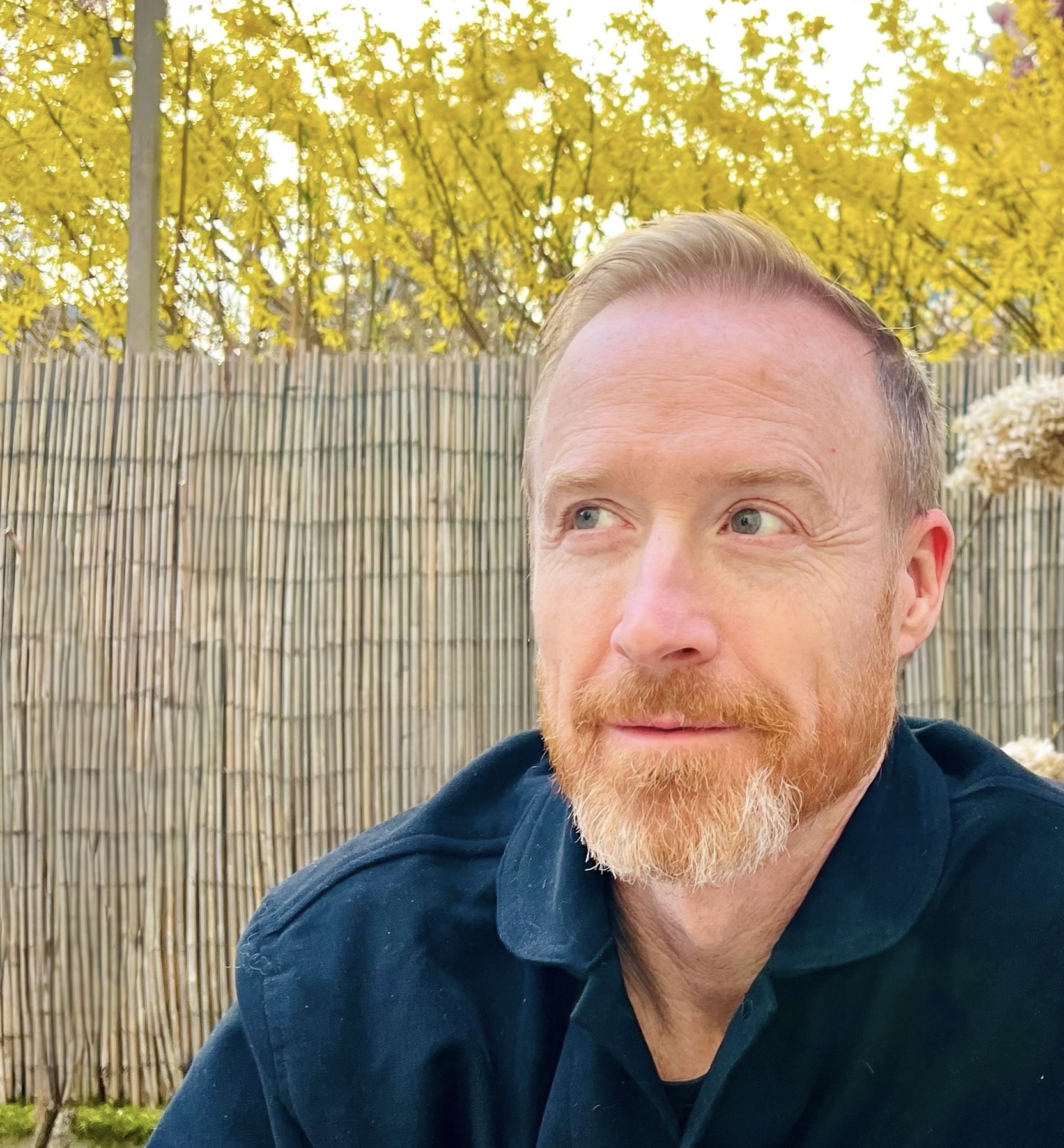
Founder
I spent a decade producing video games at Monolith Productions, shipping award-winning titles like No One Lives Forever, Tron 2.0, and F.E.A.R. In 2007, I co-founded Mindbloom, a wellness startup that used game mechanics to help people improve their lives. It was acquired in 2014. Somewhere in between, I started learning instruments, founded a youth music program called Rockclub, and began co-producing records with Francis of Delirium. I've also spent years working with a somatic coach and studying how the mind gets in its own way. GROOVS is where all of that converges.
Every GROOV is human-made. I write and produce most of them myself, and I collaborate with other musicians who are paid for their work. No AI. Supporting real musicians is part of the mission.

Science Lead
I'm Chris's son. I grew up around Rockclub playing bass, and learning firsthand how easily your head can get in the way of a stage performance. Meditation apps never worked for me, but music always did. When I started hearing my dad's tracks for GROOVS, practicing mindfulness with music just made sense.
My background is in psychology, cognitive neuroscience, and data science. On GROOVS, I make sure we never say something the science doesn't support.
And one more...
Chief Distraction Officer
Joined Sonic Temple Studios in 2026 as the company's first non-human hire. He zigs. He zags. We figure if we can train him, we can train anyone.
Same science as meditation. Way more fun.
No download required · Runs in your browser
GROOVS is a music-based attention training app. Instead of sitting quietly, you train your focus through rhythmic breathing or tapping, using music as the engagement vehicle.
Anyone whose performance suffers when their head gets in the way. The musician before the show. The athlete in the moment. The executive under pressure. The creative chasing flow.
Nobody eliminates mental interference. The people who perform best under pressure just get better at noticing and refocusing. That's the skill. That's what you're building.
Curious about the research behind it? Explore the science →
If that works better for you, absolutely. But if sitting still makes you restless, GROOVS might be your thing.
Yes. A free account unlocks the core GROOVS™ library. Premium and VIP plans unlock the full library and more.
No. GROOVS runs entirely in your browser on mobile or desktop. No app store, no install.
A free account unlocks the core GROOVS™ library. Click here to register →
Pick a GROOV. Choose breathing or tapping mode. Then train. The whole thing takes 5 minutes. Focus, wander, notice, return. That's a rep. Repeat.
Yes. GROOVS is a web app that works on any device: mobile, tablet, or desktop. A native app is on the roadmap but our first priority was making sure everyone could access it, regardless of device.
Most people notice something in their first few sessions: a quieter mind, a feeling of reset. Measurable changes in attention build over weeks of consistent practice. Think of it like fitness: the daily compound effect matters more than any single session.
The research suggests 13 minutes daily works best. But we're not robots. Do what you can, when you can. Consistency beats perfection every time.
Hip hop. Electronic. Acoustic. R&B. World. Rock. More coming. Every GROOV is originally composed with repeating rhythms and harmonies designed to train your mind. We're building a library that sounds like your playlist, not a spa.
Yes, we plan to add new GROOVS regularly. We're just getting started.
Have an idea for a GROOV? Send us a request →
The music is 100% human-made, written, performed, and produced by real musicians. We do use AI to help run other parts of the product and business more efficiently, so we can focus more resources on supporting the musicians who make GROOVS sound the way it does.
The goal isn't a quiet mind. It's noticing, quickly, when your attention drifts, and gently bringing it back. Every refocus is training the brain.
The skill being built (attention regulation) is the same; the path (rhythmic music vs silence) is different. If silent practice works for you, stick with it. GROOVS is for people who find sitting still harder than focusing on something.
Silence puts the whole burden on you. Music gives your attention a rhythm to anchor to. Engaging enough to keep you with it, simple enough to leave room for the training to happen underneath.
Attention is a skill, not a fixed trait. Studies show measurable changes in focus and mind-wandering with regular practice. It's like fitness for what you pay attention to.
Not directly. What it builds is faster noticing and gentler refocusing, useful when you're under pressure. Many people find that translates to feeling more in control. Calm is often a side effect, not the goal.
Breathing mode anchors your attention to the rhythm of your breath, guided by the moving dot. Tapping mode anchors to the rhythm of your finger or foot tapping. Same training, different on-ramp.
Whichever feels less effortful. Breathing is the most common starting point. If you find yourself fighting the breath, switch to tapping.
The single thing you're paying attention to during a session: the air through your nose, the sound of the music, the feeling of your tap, or the visual rhythm of the dots. One thing at a time.
No. That's the training. Your mind wandering is normal. Noticing it and returning to your point of focus. Wandering more isn't failing; refocusing is the win.
Optional. Closing your eyes amplifies the training because there's nothing visual to fall back on. Most people work up to it after a few sessions with eyes open.
If you keep returning your attention when it wanders, you're doing it right. There's no perfect session. The practice compounds over time, not within any single session.
© 2025 GROOVS All rights reserved